How Mole Mapping at a Skin Cancer Clinic on the Sunshine Coast Works
Mole mapping creates a detailed photographic record of your skin so your doctor can monitor moles for changes over time. At a skin cancer clinic on the Sunshine Coast, FotoFinder mole mapping can be particularly useful for people with multiple moles, significant sun exposure or other melanoma risk factors.
Unlike a one-off skin examination, mole mapping provides a baseline that can be compared at future appointments. This helps your GP identify new or changing lesions that may need closer assessment.
What Is Mole Mapping and How Does It Work?
Mole mapping, also known as total body mapping, uses high-resolution photography and dermoscopic imaging to document moles and other skin lesions.
FotoFinder mole mapping creates a visual record of your skin that can be compared at subsequent visits. This allows your doctor to look for changes that may be difficult to notice through self-checking alone.
A typical appointment takes around 45 minutes and generally involves:
- Total body photography: Images record the location and appearance of moles across the body.
- Dermoscopic imaging: Selected moles can be photographed in greater detail using magnification.
- Baseline recording: Images are stored for comparison at future appointments.
- Follow-up comparisons: New images can be compared with earlier records to identify relevant changes.
For example, someone with dozens of similar moles across their back may find it difficult to know whether one has changed. Mole mapping gives the clinician previous images to use as a direct comparison.
If you are looking for a skin cancer clinic on the Sunshine Coast, Coastal Skin & Laser offers FotoFinder mole mapping alongside skin cancer assessments.
Is Mole Mapping the Same as a Skin Cancer Check?
No. Mole mapping and skin cancer checks are related, but they serve different purposes.
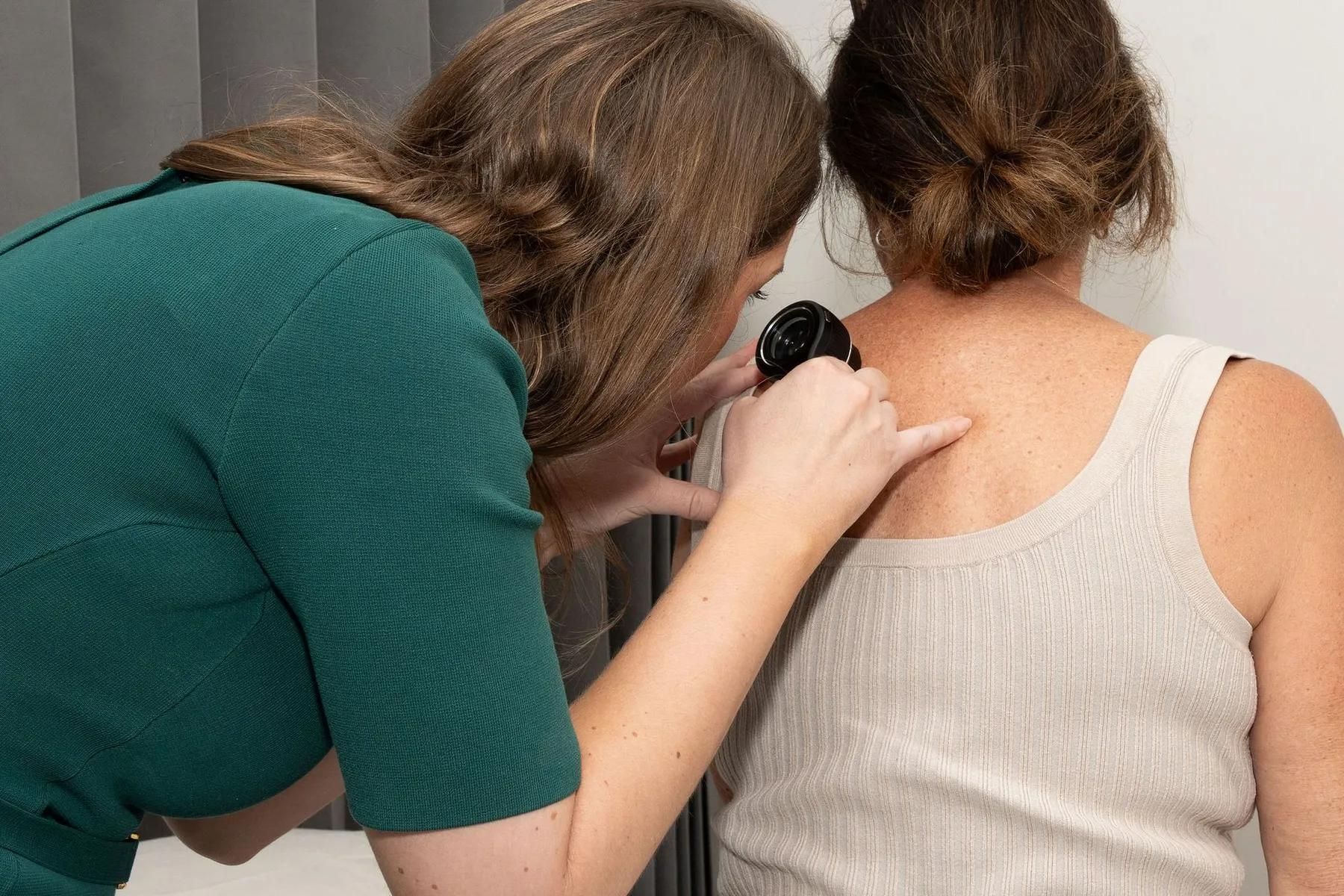
A skin cancer check involves a clinician examining your skin for suspicious lesions. A dermatoscope may be used to examine individual spots in greater detail.
Mole mapping adds an ongoing monitoring component. It records your moles photographically so their appearance can be compared between appointments.
In simple terms:
- Skin cancer check: assesses your skin and lesions now.
- Mole mapping: records your skin so changes can be monitored over time.
- Dermoscopic imaging: provides a magnified view of individual lesions.
- Total body mapping: documents the location and appearance of lesions across the body.
Mole mapping, therefore, complements rather than replaces a clinical skin examination.
You can learn more about Coastal Skin & Laser's
skin cancer checks on the Sunshine Coast, including available skin assessment and monitoring options.
Who Should Consider FotoFinder Mole Mapping?
Not everyone needs regular mole mapping. Whether it is appropriate depends on your individual skin cancer risk and your doctor's assessment.
According to industry best practice, mole mapping may be worth discussing with your GP if you:
- Have a large number of moles
- have unusual or atypical-looking moles
- Have moles on areas that are difficult to monitor yourself
- Have substantial previous sun exposure
- Have a personal history of melanoma or other skin cancers
- Have a family history that increases your melanoma risk.
People with many similar-looking moles can particularly benefit from having a consistent photographic baseline. Your GP can assess your risk factors and advise whether total body mapping is appropriate.
What Happens If Mole Mapping Identifies a Change?
A changing mole does not automatically mean skin cancer. Instead, a detected change gives your doctor a reason to examine that lesion more closely.
The GP may assess the spot using a dermatoscope and consider changes in its size, shape, colour or internal structures. Depending on the findings, they may recommend continued monitoring or further investigation.
If tissue needs to be examined by pathology, a biopsy may be recommended. Coastal Skin & Laser also provides skin procedures on the Sunshine Coast, including biopsies and excisions where clinically appropriate.
Mole mapping is therefore a monitoring tool rather than a diagnosis by itself. Clinical examination and, where required, pathology determine what further action is appropriate.
How Often Should I Get Mole Mapping?
There is no single schedule that suits everyone. How often you need mole mapping depends on factors such as your number and type of moles, previous skin cancers, family history and overall risk profile.
For some higher-risk patients, FotoFinder mole mapping may be recommended every 6–12 months. Other people may need a different schedule or may not require routine total body mapping at all.
Your doctor may also recommend checking a particular lesion sooner than your regular mapping appointment.
Importantly, do not wait for your next scheduled mole map if you notice a new or changing lesion yourself. Arrange a skin assessment if you see something that concerns you.
Why Is Total Body Mapping Useful for People With Multiple Moles?
Having many moles can make self-monitoring difficult, particularly on areas such as the back.
Total body mapping provides a consistent photographic record that your clinician can compare over time. Rather than relying solely on memory, they can refer to previous images when assessing whether a lesion is new or has changed.
This is one reason mole mapping on the Sunshine Coast may be considered for people with numerous moles or other melanoma risk factors.
Mole mapping does not replace self-checks or professional skin examinations. Instead, it adds another layer of information that can support ongoing monitoring.
What Should You Expect at a Mole Mapping Appointment?
During a FotoFinder mole mapping appointment, standardised photographs are taken of relevant areas of your body. Individual moles may also receive detailed dermoscopic imaging where closer monitoring is required.
The initial appointment establishes your baseline. At future appointments, new images can be compared with previous records so your doctor can assess relevant changes.
For Sunshine Coast residents considering mole mapping, the key point is that mole mapping and skin cancer checks work together. Mapping provides an ongoing visual record, while your doctor provides the clinical assessment needed to determine whether a lesion requires further investigation.
Coastal Skin & Laser provides skin cancer checks and FotoFinder mole mapping for patients in Tewantin, Noosa and surrounding Sunshine Coast areas. To discuss whether mole mapping is appropriate for you,
contact our team or
book a skin check online.
Frequently Asked Questions
Is FotoFinder mole mapping painful?
No. FotoFinder mole mapping is non-invasive and uses photography and dermoscopic imaging to document your skin. No tissue is removed during the mapping process itself.
How long does mole mapping take?
A FotoFinder total body mapping appointment generally takes around 45 minutes. The exact time can vary depending on how many moles or lesions need to be documented.
Is mole mapping better than a normal skin check?
They have different purposes. A skin check provides a clinical assessment of your skin, while mole mapping creates a record that can help your clinician monitor changes between appointments.
How often should I get mole mapping done?
Some higher-risk patients may be advised to have mole mapping every 6–12 months, while others may need a different schedule. Your doctor can recommend an interval based on your individual risk factors.
Do I still need to check my skin after mole mapping?
Yes. Continue monitoring your skin between appointments and arrange an assessment if you notice a new or changing lesion. Mole mapping supports ongoing surveillance but does not replace clinical skin checks.
Where can I get a mole check near Noosa?
Coastal Skin & Laser in Tewantin provides skin cancer checks and FotoFinder mole mapping for patients from Noosa and surrounding Sunshine Coast areas. You can contact the clinic or book an appointment online.